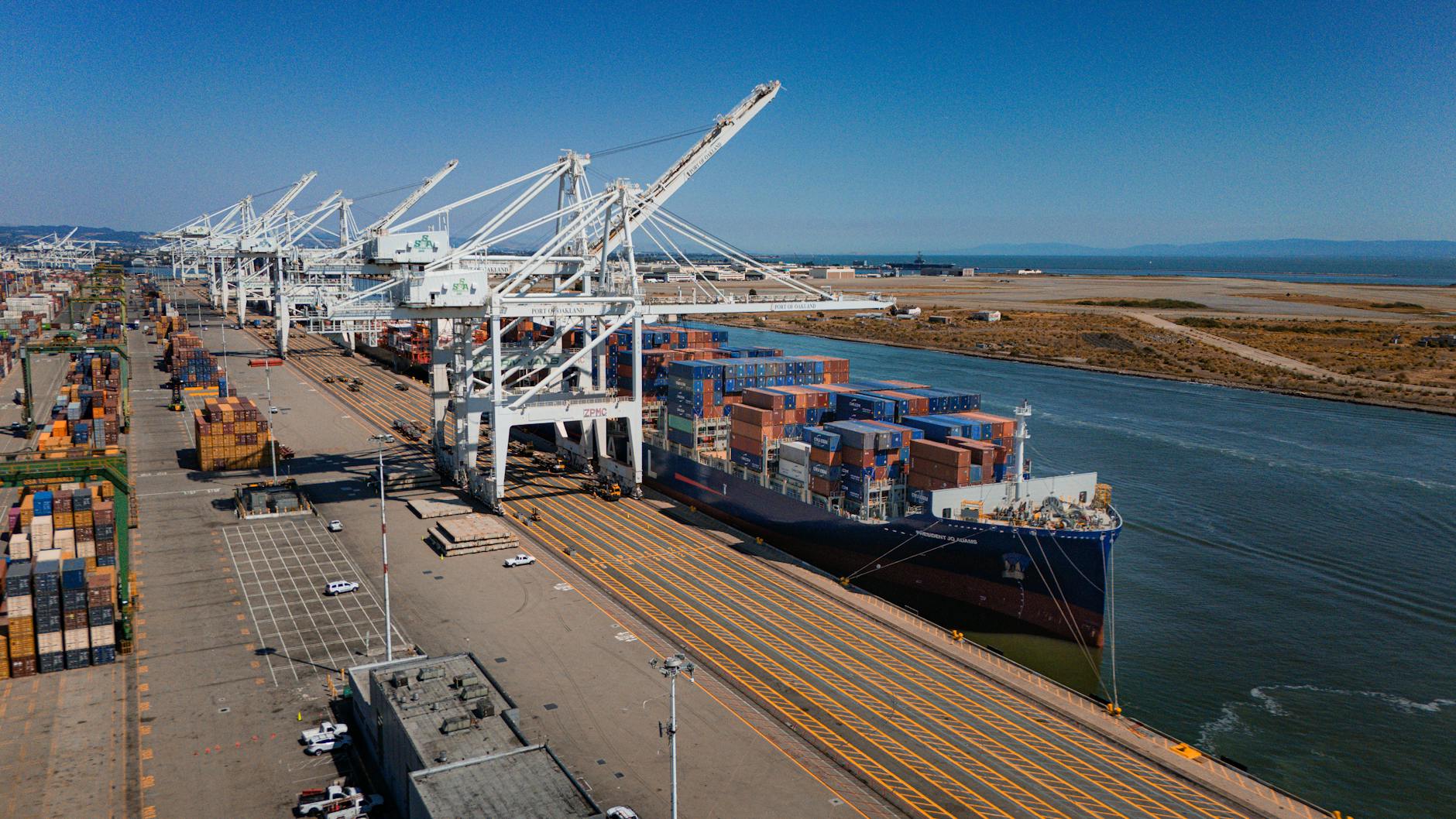
Image from Google
Author: Eli Benson
Major: Finance and Economics
Graduation: December 2026
Abstract: This article analyzes Amazon’s financial position based on historical trends and data. I used an integrated model where the income statement, cash flow statement, and balance sheet work together with supporting sheets to focus on future expectations for Amazon.
Background
Over the past few years, I have gained valuable skills at UW–Superior that are very applicable to the financial world. In this article, I used those skills to analyze Amazon’s 2025 SEC filings. The model below focuses mainly on Amazon’s historical financial data and trends to forecast future performance. However, I also used fundamental news, such as management’s expectations of increased capital expenditure in the coming years. This analysis uses a conservative and simplified approach to projections. It is intended as a learning tool rather than financial advice.
If you would like to follow along, the link is directly below. Also, reach out to me through LinkedIn or my email (both found at the very bottom of this page) if you have any questions or want a deeper look into my model.
Components
My model consists of six different components that help accurately forecast Amazon’s future data. These include,
- Income Statement
- Cash Flow Statement
- Balance Sheet
- Depreciation
- Operating Working Capital
- Debt Schedule
Income Statement
The first component I started with was the income statement. This financial statement measures a company’s profit or loss over a specific period of time. The very basic formula is revenue minus expenses equals profits. In reality, this statement is broken into many line items as shown on the income statement sheet. This statement is important because it shows how profitable a company is. With this model, Amazon could look at how a certain change in revenue or expenses will affect their net income and use that data to improve operations.
Cash Flow Statement
The next component is the cash flow statement. This financial statement shows how much cash a company has spent or received over a specific period of time. This differs from the income statement because it shows actual cash inflows and outflows versus accounting profits. The cash flow statement is broken into three different categories: operating activities, investing activities, and financing activities. This statement is important because it can be used to calculate Amazon’s free cash flow, which is used to pay out dividends (which Amazon has never done) or pay off debt.
Balance Sheet
The next component is the balance sheet. This financial statement shows a company’s financial position at a specific point in time. This financial statement is also broken into three categories: assets, liabilities, and equity. At all times, assets should equal liabilities plus equity. This statement is important because it shows Amazon’s capital structure, which helps investors understand the company they are investing in. In my model, the cash flow statement drives the balance sheet. This is why most of the forecasted values are based on the cash flow statement.
Depreciation
The next component is looking at Amazon’s depreciation. Depreciation is accounting for the aging of assets over their useful life. Because depreciation is associated with capital expenditures and property, plant, and equipment, the component is directly linked to those projections. This is important because depreciation expense reduces net income, which reduces retained earnings for a company’s shareholders. Specifically, in my model, depreciation is growing larger than its historical trend because Amazon has stated they are increasing its investment in new capital expenditures, such as AI data centers.
Operating Working Capital
The next component I made was the operating working capital sheet. Operating working capital is the operating current assets minus operating current liabilities. This is important because it shows how efficient a company is at managing day-to-day operations and its overall liquidity in the short term. More importantly, this portion is linked directly to the cash flows statement because an increase in working capital represents a cash outflow, and a decrease in working capital represents a cash inflow.
Debt Schedule
The final component used in my model is the debt schedule. This shows all major types of debt Amazon has and the associated interest payment for each. This is important to show how well the company is positioned with its debt and what would change depending on how much they decide to pay down. In the model is a cell with a formula that can change how much they pay down each year based on the cash available in the cash flow statement.
Next Steps
With a complete model in place, this analysis provides a clear view of Amazon’s current performance and future projections. The next steps will build on this model and provide additional clarity into Amazon’s financial position. This includes estimating intrinsic value through different valuation models that use a lot of the key forecasts from this model.
Reference List
Amazon.com, Inc. (2026). Form 10-K for the fiscal year ended December 31, 2025. U.S. Securities and Exchange Commission. https://www.sec.gov/edgar/browse/?CIK=1018724
Pignataro, P. (2022). Financial modeling and valuation: A practical guide to investment banking and private equity (2nd ed.). Wiley.